A First Visit to a New Stillwater: How to Read the Bank Before You Fish
A first visit to a new stillwater is easier when you pause, scan the bank and note useful questions before choosing a swim for the session.
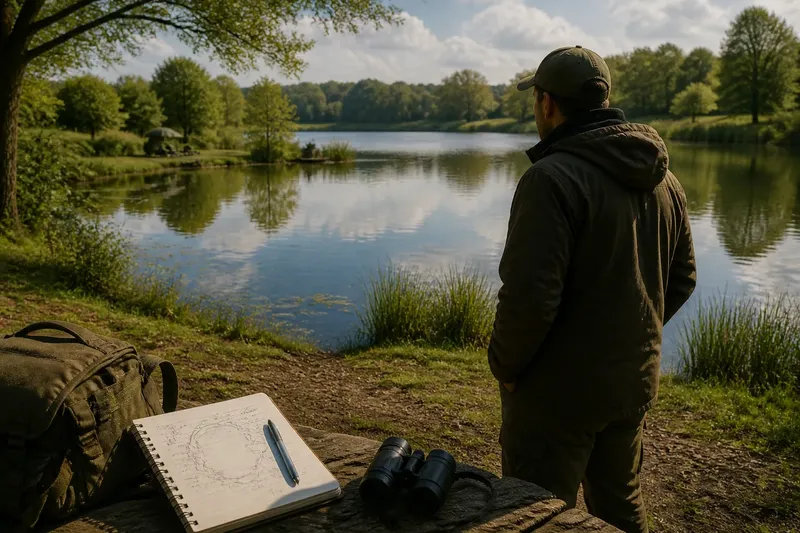
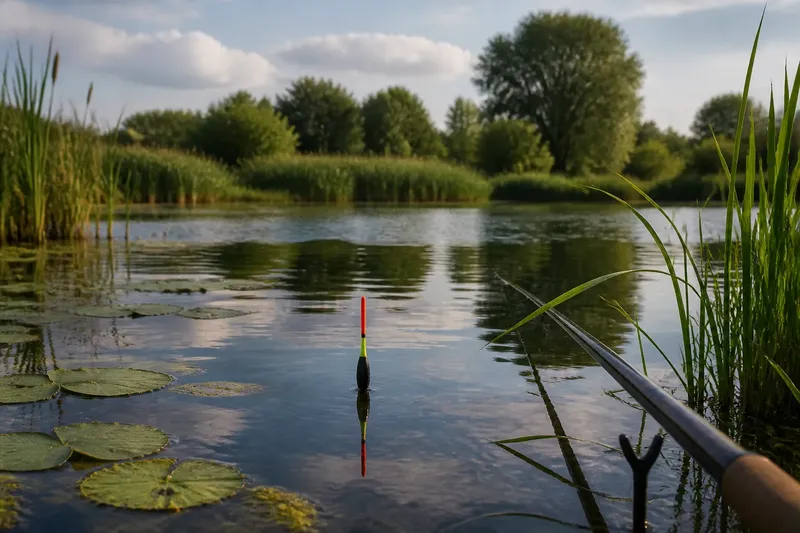
A first visit to a new stillwater is easier when you read the bank before unpacking your tackle. A quick scan can reveal where people have been fishing, which banks are accessible, where the wind is pushing surface water and what you still need to find out. The aim is not to predict exactly where fish will be; it is to choose a sensible place to begin and avoid letting the first convenient peg make the decision for you.
Arrive with enough time to look around, but give yourself a limit. You are planning a session, not surveying every corner. Walk only where access is permitted, keep clear of other anglers and treat signs, gates and local rules as part of the water’s layout. Then work through the problems that commonly make a new venue feel harder than it is.
The obvious swim wins
What goes wrong: The first open, level spot becomes the plan. It may be comfortable, but convenience alone tells you little about whether it suits the wind, the light, the depth you want to fish or the way you prefer to cast.
What usually causes it: Tackle is ready, the walk feels longer than expected, and a vacant platform looks like a decision already made. On an unfamiliar bank, anglers can also assume that a well-used swim must be the best choice. It may simply be the easiest place to reach or the only obvious clearing from the path.
What to try, in order:
- Before carrying tackle to a swim, look at the whole accessible shoreline from the path. Note open banks, sheltered corners, points, bays and any places where the bank changes direction.
- Check where the wind is coming from and which bank it reaches. A breeze can move surface water and loose natural material, but that observation is only one clue, not a promise of fish in a particular swim.
- Compare two or three possible places for casting room, safe footing, shade and a clear route back. Avoid choosing a position that would make ordinary casting awkward or bring your line across another angler’s water.
- Pick the swim that fits both the conditions and the session you actually intend to fish. If you want to sit quietly, a cramped spot beside a busy path may be a poor fit even if it looks attractive from a distance.
Say you arrive at a small pond and find the nearest platform empty, while a quieter bank offers more room but faces the breeze. You could pause at both, check access and casting space, then choose the quieter bank if it gives you a clear, comfortable approach to the water. The observable result is a deliberate starting position, not a claim that the breeze has revealed where fish must be.
Bank clues mislead
What goes wrong: A reed edge, overhanging tree or patch of bubbles is treated as a reliable sign of fish. Those features are worth noticing, but a single glance can turn an ordinary detail into a firm conclusion.
What usually causes it: Stillwater margins offer plenty to interpret. Reeds may mark a shallow shelf, a sheltered corner may collect floating leaves, and bubbles can have more than one cause. Without context, it is easy to select the clue that supports the swim you already wanted.
What to try, in order:
- Look for changes rather than isolated features: a weed line that bends, a margin that drops away, a gap between reed beds or a patch of surface activity that persists as you watch.
- Separate what you can see from what you are guessing. For example, “the surface is smooth here” is an observation; “fish are feeding here” is an interpretation.
- Check whether the clue makes sense alongside other conditions. A sheltered corner may be calm because it is out of the wind; that does not, by itself, tell you what is beneath it.
- Keep promising-looking features in mind without letting them dictate every choice. If a spot is inaccessible, crowded or unsuitable for the tackle you plan to use, note it and move on.
It is not worth circling the entire lake repeatedly in search of a perfect sign. A short, attentive look at accessible water is more useful than turning observation into a march that leaves you tired before the session begins.
Depth remains a question
What goes wrong: You choose a swim but cannot tell whether the margin shelves gently, drops sharply or carries weed across the area you hoped to fish. The uncertainty can prompt guesswork before you have even assembled a rod.
What usually causes it: A still surface hides underwater contours. Bank shape can offer hints, but it does not map the bottom. Nor does a clear view through shallow water provide a complete picture of deeper ground.
What to try, in order:
- From a safe, permitted position, inspect the water at different angles. Look for visible weed, changes in colour, submerged branches and any gradual or abrupt transition near the edge.
- Notice practical signs such as a steep, unstable bank or a narrow platform, and do not lean over or enter the water to improve your view.
- Write down the specific unknown you want to resolve once fishing begins: “Is the near shelf clear?” is more useful than “What is the bottom like?”
- Use a method suited to your tackle and experience to learn about the chosen area after setting up. Keep the first probe modest and safe rather than making a forceful cast into unseen obstacles.
The point of the walk is to create useful questions, not to pretend that the bottom has been mapped from the bank. A note about a visible weed edge or a likely change in depth gives you something to check without committing the whole session to an assumption.
Too many swims tempt
What goes wrong: Each new patch of bank looks slightly better, so you keep moving. By the time you stop, the session has become a series of hurried decisions rather than a chance to fish with attention.
What usually causes it: An unfamiliar venue offers more possibilities than you can assess in one visit. Anglers may also mistake movement for progress, especially when they have not decided what would count as a good reason to change position.
What to try, in order:
- Set a simple selection rule before unpacking: the swim must be accessible, comfortable, legal to use and suitable for your intended approach.
- Compare no more than a few realistic options. For each, note one advantage and one drawback, such as a sheltered position but awkward casting room.
- Choose a starting swim and identify a clear reason that would make you reconsider it, such as a change in wind, an access issue or a better view of the water becoming available.
- Once settled, give your observations time to become meaningful. Avoid moving just because another swim looks appealing from across the bank.
This is not a rule against moving. It is a way to make movement answer a question. If you later change swims, you should be able to say what changed and what the new position offers.
Local signs go unread
What goes wrong: A promising bank turns out to be closed, reserved, difficult to reach or unsuitable for the method you intended to use. Discovering that after setting up wastes effort and can create avoidable friction with other people.
What usually causes it: Access can be more complicated than the view suggests. A path may serve several purposes, a swim may be reserved, and a quiet-looking corner may be out of bounds. Notices and local arrangements are easy to overlook when attention goes straight to the water.
What to try, in order:
- Read venue notices and any access information before choosing a bank.
- Look for marked swims, closed areas, shared paths and places where casting could interfere with walkers or other anglers.
- Ask a bailiff or venue staff member about a point that is unclear, rather than assuming that an empty swim is available.
- Keep your route and equipment within the space you are allowed to use, and leave a clear path for others.
Rules and access arrangements vary by venue, so follow the notices and the relevant local requirements rather than relying on what was permitted elsewhere.
Useful questions first?
How long should I look around?
Give yourself enough time to compare a few accessible swims and notice the wind, bank shape and signs of use. Stop when you have a comfortable, permitted starting place and a small set of questions to check while fishing.
Should I choose the windward bank?
It can be a useful option to consider because wind may push surface water towards that side. Treat it as one condition among several, and weigh it against access, comfort, casting space and what you can actually observe.
What should I write down?
Keep notes brief and specific: wind direction, visible weed, bank access, possible depth changes and the reason you chose the swim. Add questions that can be checked later, rather than conclusions about fish you have not seen.
When should I move to another swim?
Move when a practical problem makes the current place unsuitable or when a meaningful change gives you a better option. A vague feeling that another spot might be better is less useful than a clear reason tied to conditions, access or the way you can fish.
Notes shape the session
A first visit to a new stillwater becomes calmer when you separate observation from assumption. Before settling, check the accessible bank, compare a small number of swims, note what the wind and margins suggest, and record what remains unknown. Those notes can guide your first decisions without pretending to predict the water.
Keep the record short enough to use: a few lines in a pocket notebook or on your phone will do. On a later visit, compare the conditions and your observations, not just the swim you chose. That turns an unfamiliar bank into a place you can learn gradually, while leaving room for the water to surprise you.