Fixed-Spool or Centrepin: Two Reels, Different Feel
Fixed-spool or centrepin: compare casting, line control and playing fish to choose the reel that suits your water, tackle and preferred pace.
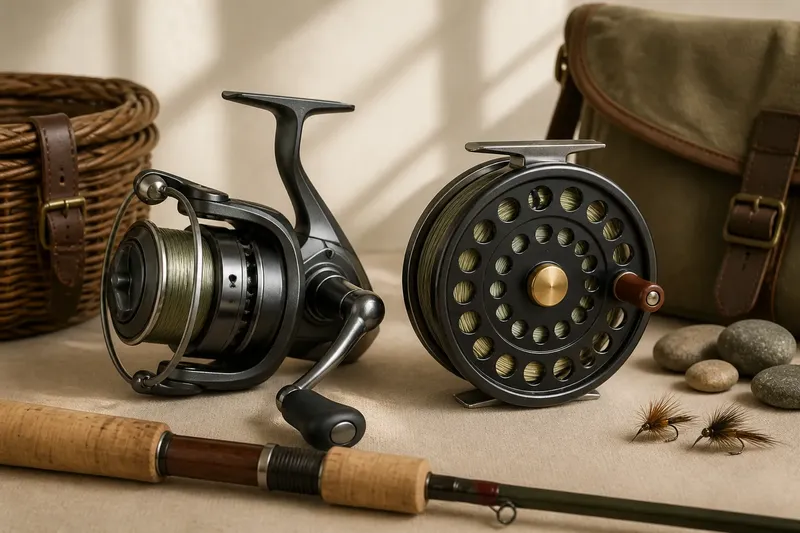
A fixed-spool or centrepin reel changes how you cast, feed line and stay in touch with a fish. The difference is easiest to understand in your hands: one manages line through a bail and a drag, while the other lets the spool turn directly under your control. Neither is the right answer for every river or angler; the better choice is the one that suits the fishing you actually do.
Two ways to manage line
A fixed-spool reel holds line on a stationary spool as the bail guides it on and off. To cast, open the bail, hold the line against the rod, make the cast, then close the bail. During the retrieve, turning the handle rotates the rotor and lays line back on the spool. The reel’s gearing does much of the work of recovering line.
A centrepin has a spool mounted to rotate freely around a central spindle. The handle turns with the spool, and line comes off as the spool revolves. In a controlled river trot, the current can pull line from the reel while you regulate the spool with a light touch. You can also turn the handle to recover line, but the direct connection makes each movement feel more immediate.
That is the basic distinction: a fixed-spool reel separates the spool from the winding mechanism, while a centrepin asks your fingers to take a more active part. The practical consequences show up in casting, running line and playing fish.
Casting and control
Fixed-spool reels are familiar to many anglers because their casting routine is straightforward and adaptable. With the bail open, the line leaves the spool in coils. A correctly filled spool and well-matched rod help those coils pass cleanly through the rings. Closing the bail after the cast brings the reel back into retrieve mode.
Centrepin casting is more closely tied to spool control. Anglers use techniques such as the Wallis cast, in which line is drawn from the reel during the cast, or a short swing suited to the space and tackle available. These methods reward coordination: the spool must release line smoothly without overrunning. A centrepin can cast effectively, but it is not simply a fixed-spool reel with the bail removed.
Consider where the cast needs to land. On a cramped, overgrown bank, a compact underarm cast may matter more than casting distance, and either reel can be used with a suitable rod and technique. If you need to cast repeatedly with little room to manage loose line, the fixed-spool routine may feel simpler. If short, controlled casts and feeding line with the current are central to your fishing, a centrepin’s direct spool can feel natural.
Playing fish by hand
On a fixed-spool reel, the drag lets line leave the spool under resistance. Set it to allow a fish to run without making the line go slack, and use the handle to recover line when the fish gives you an opening. The drag does not remove the need to judge pressure, but it offers a consistent way to manage a strong run while keeping both hands focused on rod position.
A centrepin puts more of that judgement in your fingers. You can restrain the rim of the spool to slow a run, ease off as the fish pulls away or turn the handle to gain line. This is often called palming the reel. Because the spool is directly responsive, small changes in finger pressure are noticeable. That can be satisfying, though it also asks for attention: too much restraint can put an abrupt load on the line.
Imagine you are trotting a float down a steady stretch and hook a modest chub. With a centrepin, you can slow the spool with your thumb as the fish changes direction, then let it run more freely when it pulls away. With a fixed-spool reel, you can keep the rod working and let the drag manage the run, adjusting it if necessary. Both approaches allow control; they simply place more of it in different places.
What suits your fishing?
A fixed-spool reel is a useful choice if your fishing includes varied casts, changes of venue or methods that call for frequent line recovery. It is also a sensible starting point if you want to concentrate on placing a bait and handling the rod before learning a separate spool-control technique. Choose a reel that balances the rod and holds the line you need without excessive overfilling.
A centrepin tends to suit anglers who enjoy close contact with the line and want to control its release directly. It is especially associated with float fishing on running water, where a controlled trot can carry the bait downstream. It can also serve other forms of fishing, but its advantages are most apparent when free spool movement and fingertip restraint are useful rather than incidental.
Think about the kind of attention you want the reel to demand. Some anglers like the fixed-spool drag because it takes one task off their hands during a run. Others enjoy the centrepin because feeling the spool turn becomes part of fishing, not an extra chore. Neither preference says anything about skill; it describes the sort of involvement you find rewarding.
Choosing between them?
Which reel is easier to learn?
Most beginners find the fixed-spool casting routine easier to pick up, particularly if they already know how to open and close a bail. A centrepin adds the need to regulate spool speed, so it can take more practice before casting and line release feel coordinated.
Can a centrepin cast far?
A centrepin can make useful casts, but distance depends on the reel, rod, line and casting technique. Its appeal is usually less about reaching the furthest point and more about direct control over line as it leaves the spool.
Is a fixed-spool reel suitable for river fishing?
Yes. A fixed-spool reel can be used on rivers, including for float fishing, provided the rod and reel suit the method. The main difference is that you manage line release through the reel’s bail and drag rather than by controlling a freely revolving spool.
Do I need both reels?
No. One well-chosen reel can be enough for the fishing you do. Consider a second only if a particular venue or method calls for a different kind of line control, or if you want to learn the distinct feel of the alternative.
Try the feel first
If possible, handle both types before buying. Turn the fixed-spool handle and check that the bail operates smoothly; rotate a centrepin’s spool and notice how freely it starts and stops. A tackle shop or an experienced angler may be able to let you handle a reel, and a brief demonstration can make the different actions clearer than a product description.
Match the reel to the rod rather than choosing by appearance alone. Check that the reel seat holds it securely and that the outfit feels balanced when you hold it in your normal fishing position. Think, too, about the line you use and how you plan to store and retrieve it. If you already own a suitable fixed-spool reel, there is no need to replace it just because a centrepin has a particular following.
For a first purchase, write down the method you expect to use most often, the casts your usual swims allow and how you prefer to control a running fish. If those answers point to easy casting and drag-led control, choose a fixed-spool reel. If they point to a controlled downstream trot and hands-on spool management, try a centrepin. Follow the reel and line manufacturer’s instructions when setting up the outfit.
What is not worth the effort is buying a centrepin solely for its appearance while expecting it to handle exactly like a fixed-spool reel. The pleasure of a centrepin comes from learning its particular rhythm. Equally, there is little value in dismissing a fixed-spool reel as less involved: casting well, maintaining line control and playing a fish still demand attention.
Fixed-spool or centrepin is not a contest with one winner. Choose for the way you want line to move, then give yourself time to get comfortable with that choice. The most useful test is not which reel looks more traditional or capable, but whether its handling makes sense on the water where you fish.