What a Fishing Float Shows Before It Goes Under
Learn to read a fishing float’s tilt, drift and pauses so you can separate line movement from a likely bite and respond with better timing.
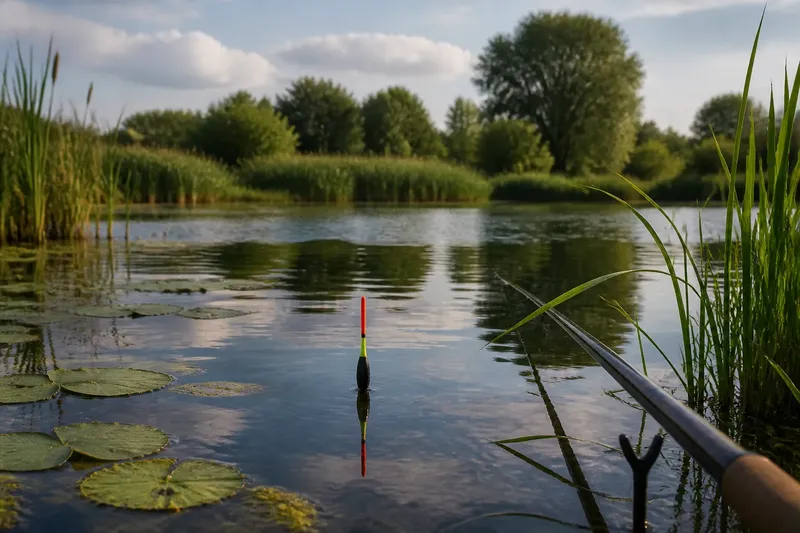
A fishing float often tells you what the line is doing before it disappears, and a changing angle can matter as much as a dip. Read its position and movement as a sequence, not as a signal that automatically means “strike”. That distinction helps you respond to genuine interest without reacting to every ripple or twitch.
Start with the baseline
Before interpreting movement, notice how the float sits when the tackle has settled. A properly set float has a repeatable resting position: perhaps its tip and a little of its stem remain visible, while most of the body is below the surface. The exact amount depends on the float design, shotting and bait, so learn the appearance of your own setup rather than relying on a universal rule.
Give the rig a moment after casting. The float may wobble as the line straightens and the bait sinks; that settling motion is useful to recognise, but it is not evidence of a fish. Once the position steadies, you have a reference point. Watch the float against a fixed feature on the far bank as well as against the water around it. This makes slow drift easier to distinguish from a change in the rig.
A change only means something in relation to that baseline. A float sitting lower than usual could reflect a fish lifting or taking the bait, but it could also mean the rig has snagged or the bait has shifted. Look for what changes next.
Read the float’s angle
A float’s angle can reveal where tension is acting. If the stem leans steadily while the float remains near the same spot, the line may be pulling sideways or the rig may be settling against an uneven bottom. If the lean develops in a short, distinct movement and then eases, something may have contacted the bait. The clue is the change in angle, not the slanted position alone.
Movement across the surface can come from wind, surface drift or tension in the line. Compare the float’s track with nearby leaves or other surface marks: if they travel together, the water may be carrying everything along. If the float moves differently, the line or bait may be influencing it. Keep the rod position steady while watching; frequent adjustments can create extra pull and make the signal harder to read.
When the float tips and then rights itself, note how quickly that happens and whether the same pattern repeats. A brief, isolated tip may be a passing disturbance. Repeated dips or a gradual pull that continues are more informative because they form a pattern rather than a single flicker.
Separate bites from disturbance
Not every movement begins at the hook. A gust can push the line, a passing wake can lift the float, and a bait settling into weed can alter its resting depth. These causes often produce broad, shared movement: the float and surrounding surface shift together, or the change fades as the water calms. A fish’s contact may produce a more localised pull, lift or pause, but no single motion is decisive in every swim.
Think in terms of a small sequence: baseline, change, then response. A float that dips, rises, and settles exactly where it began may simply have been disturbed. A float that rises and remains higher than its baseline could indicate that something has reduced tension on the rig, such as a fish lifting the bait or weight. A steady submergence is different again: the line may be moving downwards, and a prompt, controlled response can be appropriate if the movement looks deliberate.
Say you are fishing beside a bank-side reed bed and the float leans towards the reeds, pauses, then moves away while remaining lower in the water. Rather than striking at the first lean, you could watch for a continuing pull that separates from the ordinary drift. If it continues, the sequence gives you a stronger reason to lift the rod; if it relaxes and returns to its baseline, you have avoided reacting to a brief change in tension.
What does each movement mean?
Why does my float rise?
A rise can mean the rig has lost some downward tension, perhaps because a fish has lifted the bait or because the tackle has shifted. Check whether the float stays at the new height or quickly returns to its usual position.
Why does my float keep drifting?
Wind, surface flow and a moving line can all carry a float. Compare its path with nearby surface debris, then consider whether the drift is smooth or interrupted by a distinct pull.
When should I strike?
Respond to a movement that develops into a sustained or repeated signal, rather than striking at every tremor. The suitable timing depends on the rig, bait and fish, so keep any movement measured and adapt to what the float consistently shows.
Use pauses deliberately
A pause after movement is information. If the float stops at a new angle or depth, the rig may have settled against an obstacle or something may still be holding the bait. If it returns to baseline, the disturbance may have passed. Give the change a short, attentive pause rather than immediately twitching the rod; moving the tackle can erase the distinction you are trying to observe.
That does not mean waiting through every clear pull. When the float travels steadily under, or a repeated movement becomes decisive, lift smoothly and keep the response proportionate. A sharp, forceful strike can pull a small hook free or disturb a delicate presentation. The aim is to take up slack and establish contact, not to make the rod do the work of reading the signal.
Keep the set-up readable
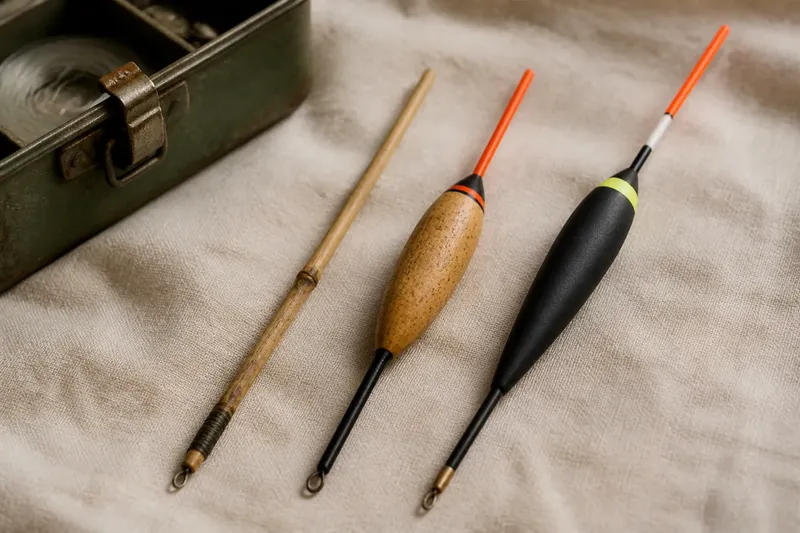
A crowded view makes subtle signals difficult to interpret. Choose a float whose visible tip stands out against the background, and avoid adding more shot than the rig needs to sit as intended. If the float is constantly buried, or its stem is hard to see, adjust the set-up before drawing conclusions from tiny movements. Use the manufacturer’s instructions and local rules where they determine how tackle should be set or used.
It is not worth chasing every tiny tremble with a new cast, a rod movement or a change of bait. First watch whether the motion repeats and whether it differs from the float’s settled behaviour. A quiet stretch with a clear view of the float can teach you more than constant adjustment.
Reading a fishing float is less about memorising a code than noticing departures from its normal position: a new angle, a lasting rise, a pull that continues, or a pause that changes the pattern. Keep the baseline in mind, watch the sequence, and let the float earn your response. When you next fish, choose one visible reference point on the bank and use it to judge whether the float itself has moved or the whole surface has drifted.