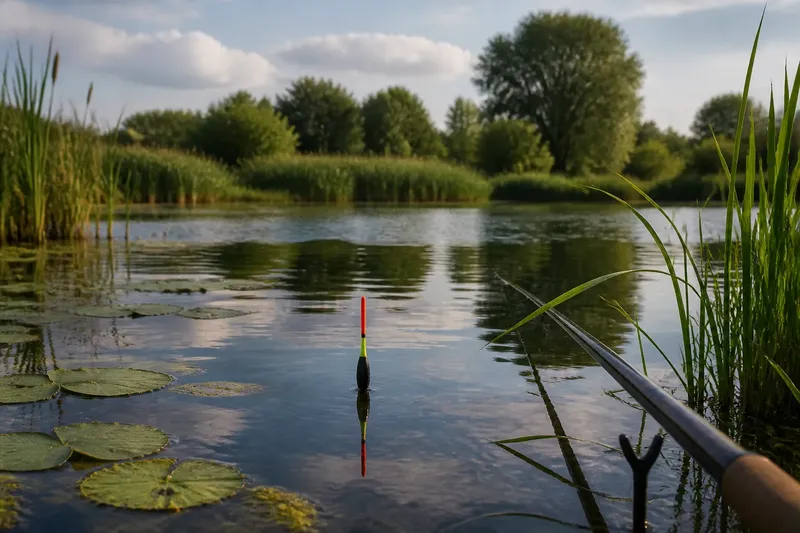
The Clear-Water Shortcut: Why Visibility Is Not the Whole Story
Clear-water fishing depends on more than visibility. Learn how depth, light, wind and bankside cover shape what you see and where fish may hold.
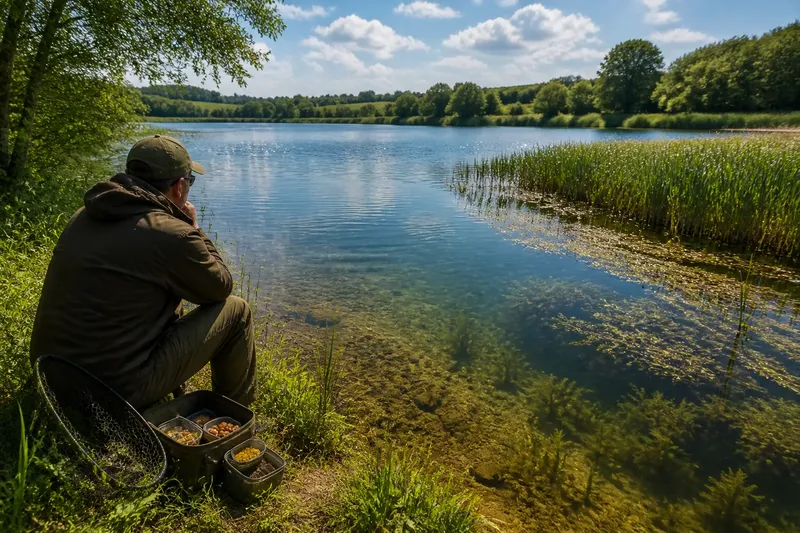
Clear-water fishing is not decided by visibility alone: depth, light, wind and the shape of the bank can change what a venue appears to offer. A bright view across a lake may make the bottom look inviting, yet tell you little about whether fish are feeding there or simply passing through.
The useful distinction is between what your eyes can see and what the water is doing. Treat clarity as one clue, then choose a reading method that suits the conditions in front of you. That keeps a clear surface from becoming a shortcut to the wrong peg, the wrong depth or an unnecessarily cautious approach.
Start with the view
Visibility describes how far into the water you can see; it does not describe the whole fishing situation. A clear margin may reveal gravel, weed and a shelf, but the view changes with angle, glare and the brightness of the sky. Look from more than one position before deciding that a patch is bare or shallow.
Also separate visible detail from fish activity. A glimpse of a fish may show its route at that moment, not where it will feed later. Conversely, an empty-looking stretch can still hold fish beyond the range of your sight, under weed, beside a drop-off or in shade.
When the bottom is visible, note its character rather than treating visibility as a verdict. A hard, pale patch, a darker silty area and a fringe of weed offer different features for fish to move around. The practical question is not simply “How clear is it?” but “What does this view reveal about the places fish can use?”
Choose by conditions
Use the situation, not a fixed rule, to decide how much the clear view should influence you.
- Shallow and bright: If sunlight reaches a broad, shallow margin, visible fish may be alert to movement above them. Keep a low profile, avoid casting a shadow across the spot and favour a position that lets you watch without standing over the water. This suits patient observation more than a noisy search along the bank.
- Deep and clear: A clear surface over deeper water can hide the bottom from view even when the water itself is clean. Give more weight to changes in depth, a drop-off, an inlet or a route between open water and the bank. A visible margin alone is a weak reason to ignore deeper features.
- Clear with a breeze: Wind can wrinkle the surface and interrupt the view, especially along a bank that catches it. That does not mean the water has become cloudy; it means the surface is giving you less information. Watch where the breeze pushes floating material and where the ripples gather, then consider whether those areas provide a useful feeding route.
- Clear in shade: A shaded bank may offer a calmer view and reduce the contrast between you and the water. Compare it with nearby sunlit ground before assuming the shaded side is more productive. Shade can make fish easier to overlook as well as less exposed.
- Clear but weedy: When weed interrupts the bottom, map its edges and openings rather than searching for a large visible patch of bare ground. A narrow lane beside weed may be more informative than a wide, open-looking expanse. Keep casts clear of plants that could snag line or cover the bait.
These are starting points, not promises about where fish will be. If the venue’s rules or the tackle maker’s instructions affect your choice, check those before changing your approach.
Read more than colour
Water colour can be misleading because it is affected by the bottom, suspended material, reflections and light. A brown or green cast does not by itself tell you how far down you can see, while bright reflections can disguise a clear bottom. If you need a reliable comparison, look at a pale object near the margin from the same angle and in similar light, then use the result only as a local observation.
Depth is often the missing part of a clear-water impression. A visible bottom may slope away quickly, leaving a shallow shelf beside water that is much deeper than it looks. Follow the bank’s contour, watch how the bottom changes and note where weed ends or gravel gives way to softer ground. Those transitions give your view a shape.
Wind is another useful clue, but not a verdict. A breeze can make one bank easier to fish by breaking up the surface, while also pushing loose weed or floating debris into the same area. Watch the water for a while: if the ripple line shifts, so does the best place to observe it. Do not assume that the windward side is automatically the feeding side.
Sound and movement matter too. Insects falling from overhanging branches, small fish turning near the surface, or repeated dimples can point to activity that a clear bottom does not explain. Listen and watch without rushing to cast at every disturbance; a single ring may be a passing fish, while repeated signs in one area deserve closer attention.
Match your approach
When fish are clearly visible in shallow water, a quiet, measured approach is usually more useful than repeated casts. Move along the bank only when you can do so without crossing the fish’s line of sight, and keep spare tackle organised before settling into position. If the fish move away, pause rather than following them closely; you may be able to see their route better from a fixed spot.
If the water looks clear but fish do not, avoid assuming they are absent. Choose a feature you can describe—an edge, a depth change, a patch of shade or a route between weed and open water—and make a considered presentation there. A single clear view has limits; returning to the same feature after conditions shift can reveal more than scanning the whole lake once.
In broken light or a surface ruffled by wind, rely less on seeing the bottom and more on the shape of the venue. Keep track of landmarks on the opposite bank, note where the bank bends and use consistent reference points to remember where a feature lies. This is more useful than trying to judge every cast against an uncertain reflection.
Say you arrive at a small lake with clear water, bright sun and a breeze running along a weedy margin. Rather than choosing the nearest patch where the bottom shows, you watch from back from the edge, note a gap between weed and open water, and see whether the ripple keeps carrying loose material past it. The observable result is a more precise picture of that margin and a reasoned place to try, not a claim that fish must be there.
Questions anglers ask?
Does clear water mean fish can see me?
In shallow, bright water, your outline and movement may be easier for fish to detect, especially if you stand close to the edge. A low profile and fewer sudden movements are sensible adjustments, but visibility alone cannot tell you how fish will respond.
Should I always fish deeper in clear water?
No. Depth is worth considering when the visible margin slopes away or fish are not showing, but shallow water can still hold feeding fish. Choose according to features and activity rather than applying a depth rule based on clarity.
Can wind make clear water look cloudy?
Wind commonly roughens the surface and changes reflections, which can make the bottom harder to see without changing the water itself. If the water appears genuinely stirred or carries debris, treat that as a separate observation from a simple loss of visibility.
What should I watch when the bottom disappears?
Use the bank’s shape, weed edges, surface movement and repeated signs of feeding as your reference points. Keep a note of where those features sit relative to fixed landmarks so you can return to them after the light or breeze changes.
Skip the false precision
It is not worth repeatedly peering into the same patch from changing angles and treating each view as a fresh reading. Glare can make small differences look meaningful, and standing at the water’s edge may disturb the very margin you are trying to understand. Take one careful look from a discreet position, then spend time watching for movement and changes in the surface.
For clear-water fishing, visibility is a useful clue, not a map of fish. The most dependable reading combines what the water lets you see with depth, light, wind, weed and signs of activity. When you return to a feature, remember why you chose it; that small habit makes clear-water fishing more observant and less governed by appearances.